Blog › Article
Engine shaking and a flashing check engine light? Here's what a misfire is
What an engine misfire feels like on a BMW, Audi, VW, MINI or Subaru, why a flashing check engine light means pull over soon, the usual causes from coils and plugs to carbon buildup, and how a good shop actually tracks it down.
If the check engine light is flashing, not just on but blinking, ease off and get the car somewhere safe soon. That's the short answer. The rest of this is why.
A flashing light on most cars means the engine computer sees a misfire bad enough to damage the catalytic converter. A steady light means something is stored and worth checking. Blinking means it's happening right now.
So what is a misfire?
Each cylinder is supposed to fire in turn: air and fuel go in, the spark plug lights it, the burn pushes the piston down. When one cylinder doesn't fire, or fires weakly, that's a misfire. The engine is suddenly running on three of its four cylinders, or five of its six, and you can feel it.
Owners describe it a lot of different ways. A shake at stoplights. A stumble or a hiccup when they step on it. The car "bucking" on the highway. On a four cylinder it's usually obvious. On a smooth BMW straight six, a single dead cylinder can feel more like a vibration through the seat that wasn't there last week.
The raw fuel from the dead cylinder doesn't just disappear. It goes into the exhaust and burns in the catalytic converter, which gets very hot. Do that for long enough and the converter can be damaged. That's why the flashing light matters, and why a coil today is cheaper than a coil plus a converter later.
A pretty typical one
Picture a GTI owner on the highway. Car's been fine. Then a shudder going up a grade, and the check engine light starts blinking. They back off, it smooths out a bit, they limp it in.
Scan it and it says cylinder 3 misfire. Pull the coil on 3, swap it with the coil on 2, clear the code, drive it. Now it says cylinder 2. The misfire followed the coil. Done, that's the problem.
That swap test is old-school and it still works. If the misfire moves with the coil, it's the coil. If it stays put on the same cylinder, the coil is probably fine, and it's time to look at the plug, the injector, or what's going on inside that cylinder.
The usual suspects, roughly in order
Ignition coils
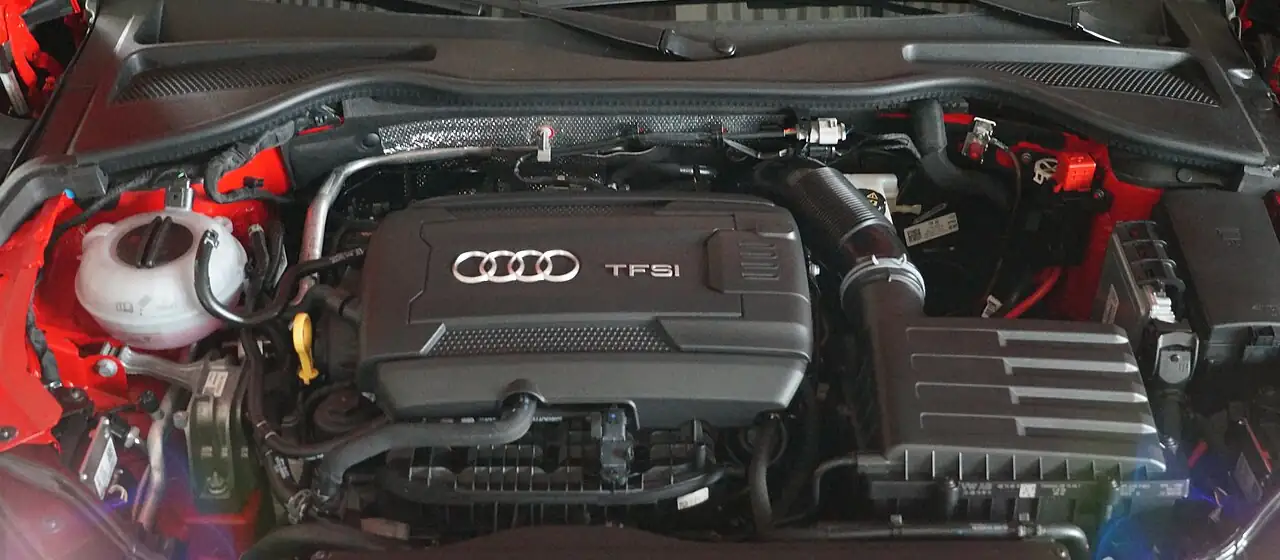
Most modern imports use one coil sitting right on top of each spark plug. They live in a hot spot on top of the engine, and they don't last forever. Turbo engines like the VW and Audi 2.0T, the BMW N54 and N55, and the MINI Cooper S are hard on them because higher cylinder pressure takes more voltage to fire. A weak coil might be fine at idle and only miss under boost.
Spark plugs
Plugs wear, and the gap grows. A worn plug asks the coil for more voltage, which is hard on the coil too. That's why a lot of shops recommend plugs when a coil goes, if the plugs are anywhere near due. Intervals vary by engine and your owner's manual has yours, but tuned turbo cars generally want plugs more often than stock.
For BMW sixes, we have 3 owner reports on a BMW N52/N54/N55 spark plug change, with dealer quotes at a median of $560. Small sample, so read the notes on each report.
Oil in the plug wells
This one is very BMW. When the valve cover gasket and spark plug tube seals start leaking, oil pools down around the plugs and soaks the coil boots. You fix the coil, and three months later the misfire is back. If a tech pulls a coil and it's wet with oil, the real job is the gasket. We wrote about that in the BMW burning oil smell post, and owners have reported what they paid for a BMW N55 valve cover gasket.
Carbon buildup
Direct injection engines can build up carbon on the intake valves, and a bad case causes rough cold idle and misfires that keep coming back no matter how many coils you throw at them. Audi, VW, BMW and MINI direct injection engines are the usual examples. Here's how carbon buildup works, and what owners paid for Audi carbon cleaning, with a non-dealer median of $799.
The less fun stuff
Injectors, vacuum leaks, a cracked intake boot, wiring to the coil, or low compression from a valve or head gasket problem. A misfire on a Subaru EJ25 with coolant loss is a different conversation than a misfire on a GTI with a bad coil, for example.
What a good shop does before selling you parts
A misfire code is a starting point, not a parts list. Here's the order we'd expect:
- Read the codes and the freeze frame data, which shows the conditions when it happened.
- Look at misfire counts per cylinder, if the car's software shows them.
- Pull the coil and plug on the bad cylinder and look. Oil, cracks, carbon tracking, a worn or damaged plug.
- Swap parts between cylinders to see if the misfire moves.
- If it doesn't move, check the injector and run a compression or leak-down test.
Be a little wary of a quote for "all coils, all plugs" without any of that. Sometimes replacing the full set is the right call, especially on a high mileage car where they're all original. But you should hear why.
Can I drive it?
Steady light, car feels normal: get it scanned soon, drive gently until then. Flashing light, or the car is shaking hard: keep it short and easy, and if it doesn't calm down, it's a tow.
If you've got a quote in hand already, how to tell if a repair quote is fair is worth a read, and the dealer vs independent comparison shows how the two tend to price jobs like these.
This article is general information for car owners. It is not a substitute for a diagnosis by a qualified mechanic who can inspect your car. Prices mentioned are medians of owner reports, not quotes.