Blog › Article
Big cloud of smoke from your Boxster or 911? Start with the air-oil separator
Why M96 and M97 Porsche engines (986/987 Boxster, Cayman, 996 and 997.1 911) can blow smoke on startup, how a failing air-oil separator causes it, what else looks the same, and what owners have paid to replace it.
You fire up the Boxster in the driveway and a cloud rolls out the back. Not a little puff. The neighbors-come-outside kind.
Then it clears and the car idles like nothing happened.
If you own a 986 or 987 Boxster, a Cayman, a 996, or an early 997, this is a scene a lot of owners have been through. And while it looks like the engine just let go, more often than not the cause is a plastic part about the size of a shoebox.
What an air-oil separator does
Every engine pushes a little combustion gas past the piston rings and into the crankcase. That's called blow-by, and it's normal. Those gases carry oil mist with them, and they have to go somewhere. Modern engines route them back into the intake to get burned, instead of venting them into the air.
The air-oil separator, or AOS, sits in the middle of that path. Its job is in the name. It lets the gases through to the intake while catching the oil and sending it back down to the sump. It also regulates how much vacuum the intake can pull on the crankcase, using a rubber diaphragm inside.
That diaphragm is the weak spot. Heat and age harden it and eventually it tears or stops sealing. When that happens, the intake starts pulling far too hard on the crankcase, and instead of just mist, actual oil gets sucked into the intake and burned.
Hence the smoke.
What owners usually notice
The startup cloud is the famous one. Some cars also smoke when you let off the gas coming down a hill, or after sitting at a long idle. The smoke is bluish white and smells like burnt oil, not sweet.
Then there's the stuff that's easier to miss. Oil consumption creeps up and you start adding a quart between changes when you never used to. The idle gets lumpy. The check engine light comes on, often with lean codes, because the separator is now acting like a vacuum leak and the computer sees extra air it didn't measure. Some owners hear a whistle or a honk from the engine bay. And on some cars the oil filler cap becomes weirdly hard to pull off with the engine running, because the crankcase is under heavy vacuum.
Here's the thing, though. Not every failing AOS smokes. Some just throw codes and run a little rough. So "it doesn't smoke" doesn't clear it.
Things that look the same
A cloud of smoke out of a flat six can come from a few places, and a good shop rules them out before ordering parts.
A puff after parking on a slope. These are horizontally opposed engines. Park nose-up or nose-down on a steep driveway, or let the car idle a long time, and a little oil can find its way where it shouldn't. A short puff on startup in that situation, once, isn't automatically a failure. A big cloud every morning is different.
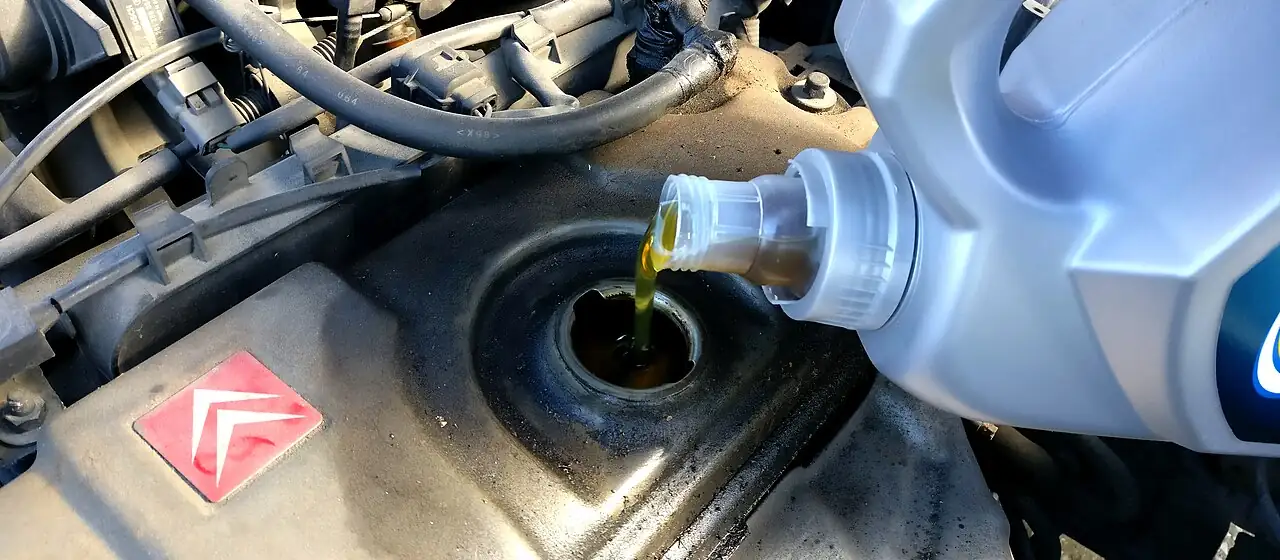
Overfilled oil. Too much oil in the sump can get pushed into the ventilation system and burned. Check the level properly before anything else, on level ground and the way the owner's manual says to.
Coolant. White smoke that smells sweet and doesn't go away as the car warms up points to coolant, not oil. Different problem, and a much more serious conversation.
Bore scoring. This is the one owners worry about with these engines, and it's worth taking seriously. Scored cylinder walls let oil past the rings and can cause smoke and heavy oil use too. The tells are often a ticking that's louder on one bank, sooty tailpipe on one side, and low compression or high leak-down on specific cylinders. A shop can look at the cylinder walls with a borescope through the spark plug holes. If you're buying one of these cars, ask for that inspection.
How a shop actually confirms it
The usual approach is to measure crankcase vacuum, often with a gauge rigged to an old oil filler cap. A healthy separator holds the vacuum in a narrow range. A torn one lets it climb way past that. They'll also look for oil pooled in the intake and throttle body, and check fuel trims on a scan tool. Put those together with the symptoms and it's usually a pretty clear call.
What they don't want to do is see smoke and guess.
Can you keep driving it?
A little, carefully, while you get it scheduled. Keep an eye on the oil level, because it can drop faster than you'd think, and running these engines low on oil is the worst thing you can do to them. Spark plugs can get fouled, and over time the oil being burned isn't great for the catalytic converters either.
On the far end, if enough liquid oil gets pulled into a cylinder at once, it can damage the engine, since oil doesn't compress. That's rare. But it's part of why heavy, recurring smoke shouldn't be lived with.
Replacing it
On most of these cars the AOS is a manageable job for a shop that knows them. It's mostly labor getting to it, plus the part and new hoses if the old ones are brittle. The updated Porsche part is the one to ask for. Some owners go with an aftermarket separator designed for track use, and that's a decision to talk through with whoever works on the car.
While it's in, it's a good time to ask about the other usual M96 and M97 items. The IMS bearing guide covers the one everybody's heard of, and water pumps on these engines are a known wear item too.
What owners have paid
These are owner-reported prices from public posts, each linked to its source on the job page:
- Porsche 996/986 air-oil separator replacement: non-dealer median $1,200 across 7 reports
- Boxster/Cayman/911 (M96/M97) water pump: non-dealer median $950 across 1 reports
- Porsche 986/996 IMS bearing: non-dealer median $4,000 across 5 reports
For a car this age, a lot of owners are well past the dealer anyway. If you're still deciding, our dealer vs independent comparison shows how pricing tends to split on jobs like these.
This article is general information for car owners. It is not a substitute for a diagnosis by a qualified mechanic who can inspect your car. Prices mentioned are medians of owner reports, not quotes.