What long mountain grades on I-70 do to your brakes and cooling system, how to drive them without cooking anything, and what Colorado's traction and chain laws mean for your import.
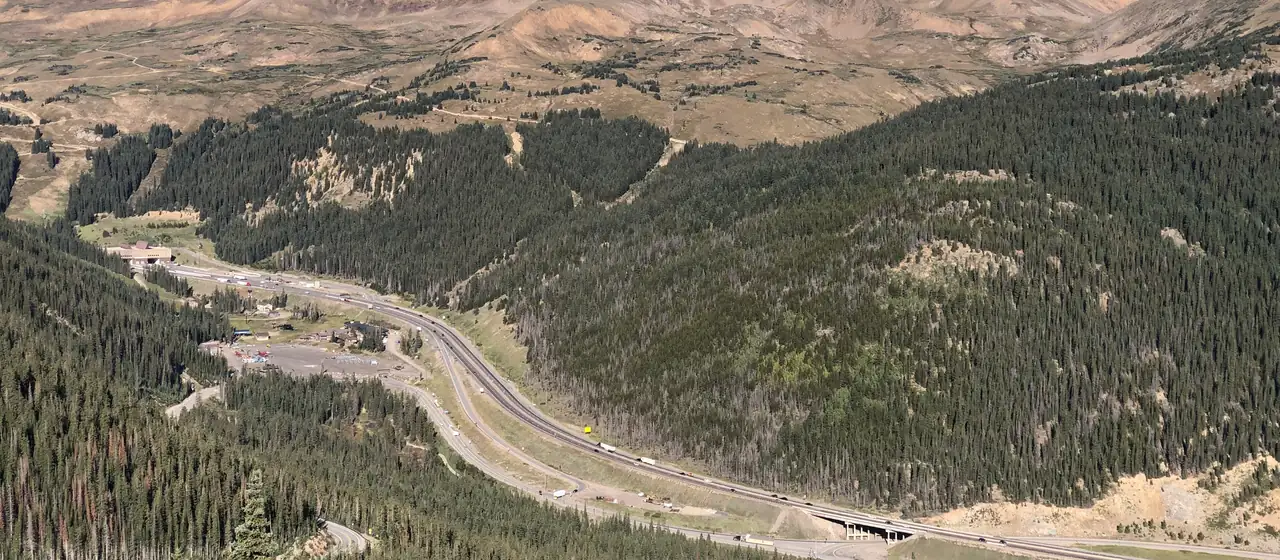
Anyone who's driven I-70 to the ski areas knows the drill: a long climb out of the foothills, the tunnel, and then long downhill grades on the other side. A car that's perfectly happy in town can get tested hard up there. Brakes and cooling systems take the beating.
Going down: let the engine do some of the work
On a long downhill, riding the brakes the whole way heats the pads, rotors and fluid. Get them hot enough and the pedal goes soft or the brakes fade, which is the last thing you want with a line of trucks behind you.
- Use a lower gear. In an automatic, use the manual mode or paddles to pick a lower gear so the engine holds the car back. In a manual, pick a gear you'd use to climb that hill.
- Brake firmly, then let off. Short, firm stops to scrub speed beat light, constant pressure.
- Watch for the runaway truck ramps and the signs for steep grades. If the semis are crawling, there's a reason.
- Smell hot brakes? Pull off where it's safe and let them cool. Don't sit with your foot hard on the pedal while they're smoking.
Brake fluid matters more than people think
Brake fluid absorbs moisture from the air over time, and old fluid boils at a lower temperature than fresh fluid. Boiled fluid is what causes a pedal that goes to the floor after a long descent. Most European makers call for a fluid change every two years or so. If you drive the mountains a lot and yours is overdue, have it done.
If your pads or rotors are near the end, swap them before ski season. Our owner-reported prices: BMW 3 Series front brakes, Audi A4 front brakes, Mercedes front brakes, Volvo front brakes, Infiniti G35 / 350Z front brakes.
Going up: keep an eye on the temperature
Long climbs at highway speed are hard work for the engine and cooling system, and the air is thinner, so the radiator and fans have less to work with. Turbo cars also run their turbos harder at altitude.
- Know where your temp gauge normally sits. Many European cars hold the gauge dead center and only move it when something's wrong. If it climbs, that's real.
- If it starts to run hot: turn off the AC, turn the heater to full hot and the fan to high (it pulls heat out of the engine), and ease off. Pull over if it keeps climbing.
- Never open a hot radiator or expansion tank cap. The system is under pressure.
Cooling parts are a known weak spot on a lot of imports. If you've been topping off coolant, find the leak before a mountain trip. See prices for the BMW N54 water pump, VW/Audi 2.0T water pump, Audi 3.0T water pump and thermostat, MINI water pump, Porsche M96/M97 water pump and Toyota/Lexus 2GR water pump.
The traction law and chain law
CDOT can turn on the Passenger Vehicle Traction Law on any state highway when conditions call for it. On I-70 between Morrison and Dotsero it can be enforced from September 1 to May 31. Under the traction law you need tires with at least 3/16" of tread that are rated all-weather or winter (mountain-snowflake or M+S), or chains or an approved alternative traction device.
When a storm gets bad enough, CDOT can put the Passenger Vehicle Chain Law in place. That's the last step before closing the highway, and then every vehicle needs chains or an approved alternative traction device.
Fines for not complying start at $100 plus a surcharge, and they go up a lot if your car ends up blocking a lane. Check CDOT's page for the current rules and the list of approved traction devices, and check COtrip before you go.
A note for low-slung imports: a lot of performance cars with big wheels and tight wheel-well clearance can't fit traditional chains. Check your owner's manual. Many manufacturers say which traction devices (if any) are allowed. Winter tires are usually the better answer.
Before a ski-season road trip
- Tire tread and pressures
- Brake pads, rotors and fluid age
- Coolant level, and no leaks under the car
- Battery tested
- Wipers and washer fluid rated for the cold
- A full tank. Closures on I-70 can leave you sitting for hours.
Sources
- CDOT: Passenger Vehicle Traction and Chain Laws
- CDOT: Snow Removal and Safety
- COtrip (CDOT road conditions)
General information, not legal advice. Check CDOT and your owner's manual for the rules and specs that apply to you.