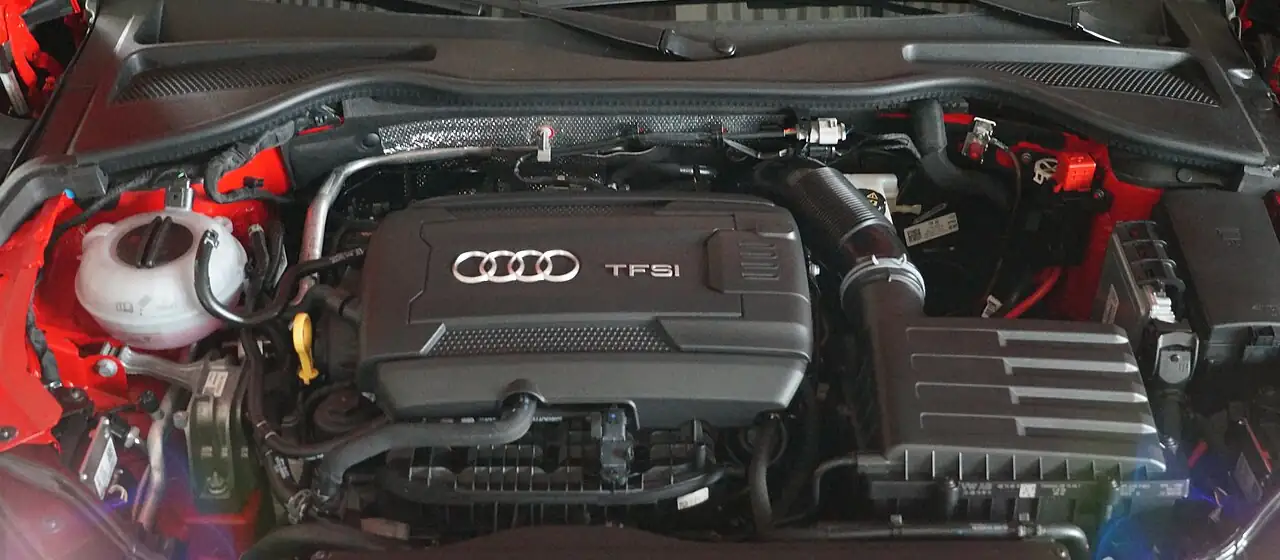
Direct-injection Audi engines build carbon on the intake valves. Signs you need walnut blasting, what the shop actually does, and the 13 owner prices we've collected.
This is our most-reported job, and it's a direct-injection thing. On older port-injected engines, fuel sprayed onto the back of the intake valves and kept them fairly clean. Direct injection sprays fuel straight into the cylinder, so nothing washes the valves. Oil vapor from the crankcase vent bakes on instead, and over time it turns into hard carbon.
Audi's FSI and TFSI engines (the 2.0T, the 3.2 and the 4.2 V8 from the mid-2000s on) are known for it. VW, BMW, MINI and others get it too.
Symptoms
- Rough or shaky idle, especially cold
- Misfire codes, often on a cold start
- Hesitation or a flat spot under load
- Slowly getting worse over time rather than all at once
Misfires can also be coils, plugs, or a PCV problem. A good shop will scope the valves through the intake ports before selling you a cleaning. Ask for the pictures. Most shops are happy to show them.
How walnut blasting works
The intake manifold comes off. Each cylinder gets rotated so its intake valves are closed, and the tech blasts crushed walnut shell media into the port with a shop vac pulling the debris out. Walnut is hard enough to knock the carbon loose but soft enough not to hurt the metal. Then it's new intake gaskets and back together.
Chemical cleaners poured or sprayed through the intake help a little on light buildup. They don't do much on heavy carbon.
How often
Depends on the engine, how it's driven and how well the crankcase vent system is working. Lots of short trips make it worse. A lot of owners end up doing it somewhere past 50k miles, and some again later.
What changes the price
- 4-cylinder vs V6 or V8 (more ports, more labor)
- Whether plugs, intake gaskets, or PCV parts get done at the same time
- Whether the quote includes a before/after scope
Our 13 reports give a decent spread, and two of them are local: quotes from a Denver shop and a Parker shop in 2020. Look at the details column on the cost page, because a couple of the higher ones included other work, like oil housing gaskets or "extras."