Blog › Article
Topping off coolant on your Subaru every few weeks? Let's talk about the head gaskets
Why the 2.5-liter EJ25 in older Outbacks, Foresters, Legacys and Imprezas is known for head gasket leaks, what an external seep looks and smells like, how a shop confirms it, why the timing belt often gets done at the same time, and what owners have paid.
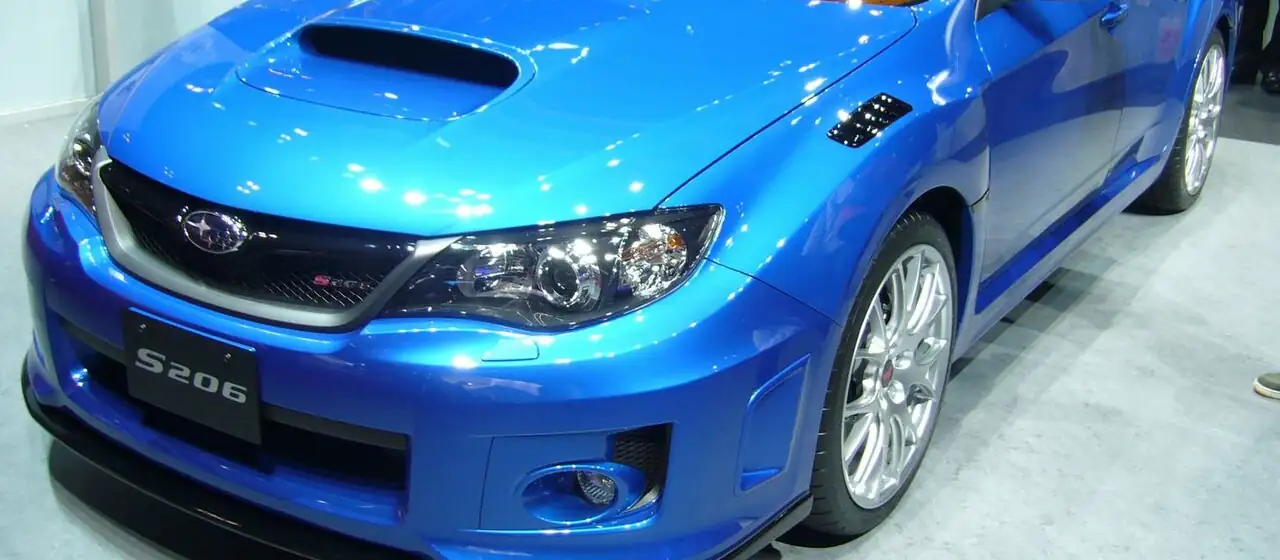
Most of the time it starts with the coolant bottle.
You pop the hood for washer fluid, notice the overflow tank is down near the low mark, and top it off. A month later it's low again. There's no puddle in the garage. The temp gauge sits right where it always does. Maybe you catch a faint sweet smell after a long drive, or a burnt-oil smell when you park, and you can't tell where it's coming from.
If the car is an older Subaru with the 2.5-liter engine, a shop is going to want to look at the head gaskets before anything else.
Which Subarus we're talking about
The engine is the EJ25, the non-turbo 2.5 that went into the Outback, Legacy, Forester and Impreza for roughly the late '90s through the early 2010s. It's a flat engine, a "boxer," with the cylinders lying sideways on either side of the crank. That layout is a big part of why Subarus feel planted and low, and it's also part of the head gasket story. The heads sit on the sides of the block, so a gasket that starts to weep has coolant and oil sitting right at the seam instead of draining away from it.
The FB engines that replaced the EJ25 starting around 2011 don't carry the same reputation. The turbo WRX and STI are their own story.
Here's the thing: not every EJ25 leaks. Plenty go well past 200,000 miles on the original gaskets. But enough of them do that any Subaru tech checks for it out of habit.
What it actually looks like
There are two ways this shows up, and they're not equally urgent.
The slow outside seep. This is the common one on the later EJ25s. Coolant, oil or both start weeping out between the head and the block. From underneath you'll see a damp line or a crusty white, green or blue residue along the seam, a lot of the time on the driver's side. If the leak is oily, it can drip onto the exhaust below and that's your mystery burning smell at stoplights. Coolant loss is slow. A few ounces over weeks.
The inside leak. This is the one that hurts engines. The gasket stops sealing between the combustion chamber and the cooling passages, and exhaust gas gets pushed into the coolant. Signs include:
- Coolant disappearing with nothing on the ground
- White, sweet-smelling exhaust that doesn't clear up once the car is warm
- Bubbles in the overflow tank with the engine running
- The temp gauge spiking on a long climb, then dropping back down
- A heater that blows cold for a second and then hot again, because there's air in the system
Less often, coolant ends up in the oil and you get a milky, light-brown sludge under the oil cap. A little condensation on the cap after a winter of short trips can look similar, so don't panic over one cold-morning look. If the dipstick itself looks like a chocolate shake, stop driving it.
The customer we see every fall
Typical story. An Outback with 140,000 miles comes in for an oil change before ski season. The owner mentions, almost as an aside, that they've been adding coolant "a little" since summer. We get it in the air and there's a dark wet line along the head seam with dried coolant crusted below it. The temp has never moved. Nothing feels wrong to them.
That's the good outcome, honestly. It was caught at the seep stage, the engine has never been hot, and the owner gets to plan the repair instead of having it planned for them on the side of I-70.
The bad version is the same car six months later, after a summer trip over a pass with a trailer, coming in on a tow truck with a warped head.
How a shop confirms it
A good shop won't just look at your mileage and say head gaskets. They'll usually:
- Pressure-test the cooling system to see whether it holds and where it leaks
- Run a combustion leak test (sometimes called a block test), which uses a fluid that changes color if there's exhaust gas in the coolant
- Put the car on a lift and look at the head-to-block seam with a light
- Check the oil for coolant
A hose, the radiator, a water pump or the overflow tank itself can all lose coolant too. You want to rule those out before anyone quotes you for gaskets. If the car has overheated recently, our post on why cars overheat walks through what else could be going on.
Why the timing belt usually comes along
To get the heads off a Subaru, the timing belt has to come off. Which means if your belt is anywhere near due (the EJ25 belt is commonly replaced around 105,000 miles, check your own booklet), it makes sense to replace it during the head gasket job instead of paying for the same labor twice a year later. Most shops will quote the belt, idler pulleys, tensioner and water pump as an add-on.
That's why quotes for this job are all over the place. Make sure you're comparing the same work, including whether the heads get checked flat at a machine shop.
What owners have paid
These are owner-reported prices from public posts, each linked to its source on the job page:
- Subaru EJ25 head gasket replacement: non-dealer median $4,000 across 2 reports
- Subaru EJ25 timing belt: non-dealer median $812 across 5 reports
Small samples, so use them as a ballpark. A head gasket job is a big labor job either way, and that's where independent and dealer pricing tend to split. The dealer vs independent comparison has more on that.
So do you fix it now?
If it's an outside seep, the car runs cool and you're losing a little coolant over a long stretch, a lot of owners watch it and plan the repair. If you go that route, check the coolant level every week or two with the engine cold, keep a jug of the right coolant in the car, and watch the gauge on long climbs. The day you see bubbles, white smoke, milky oil or that needle moving, the watching part is over.
And if you're shopping for a used Outback or Forester with this engine, ask whether the head gaskets have ever been done and get it on a lift before you buy. Receipts for gaskets and a belt at 120k are worth real money on these cars.
This article is general information for car owners. It is not a substitute for a diagnosis by a qualified mechanic who can inspect your car. Prices mentioned are medians of owner reports, not quotes.